Portfolio of UX design and research.

Project in progress: Assembli, a group decision-making platform

Assembli is a web app that helps teams and organizations decide together. Members raise issues, discuss solutions, and settle them with ranked-choice voting. Everyone gets a say, without the long meetings.

Sketch

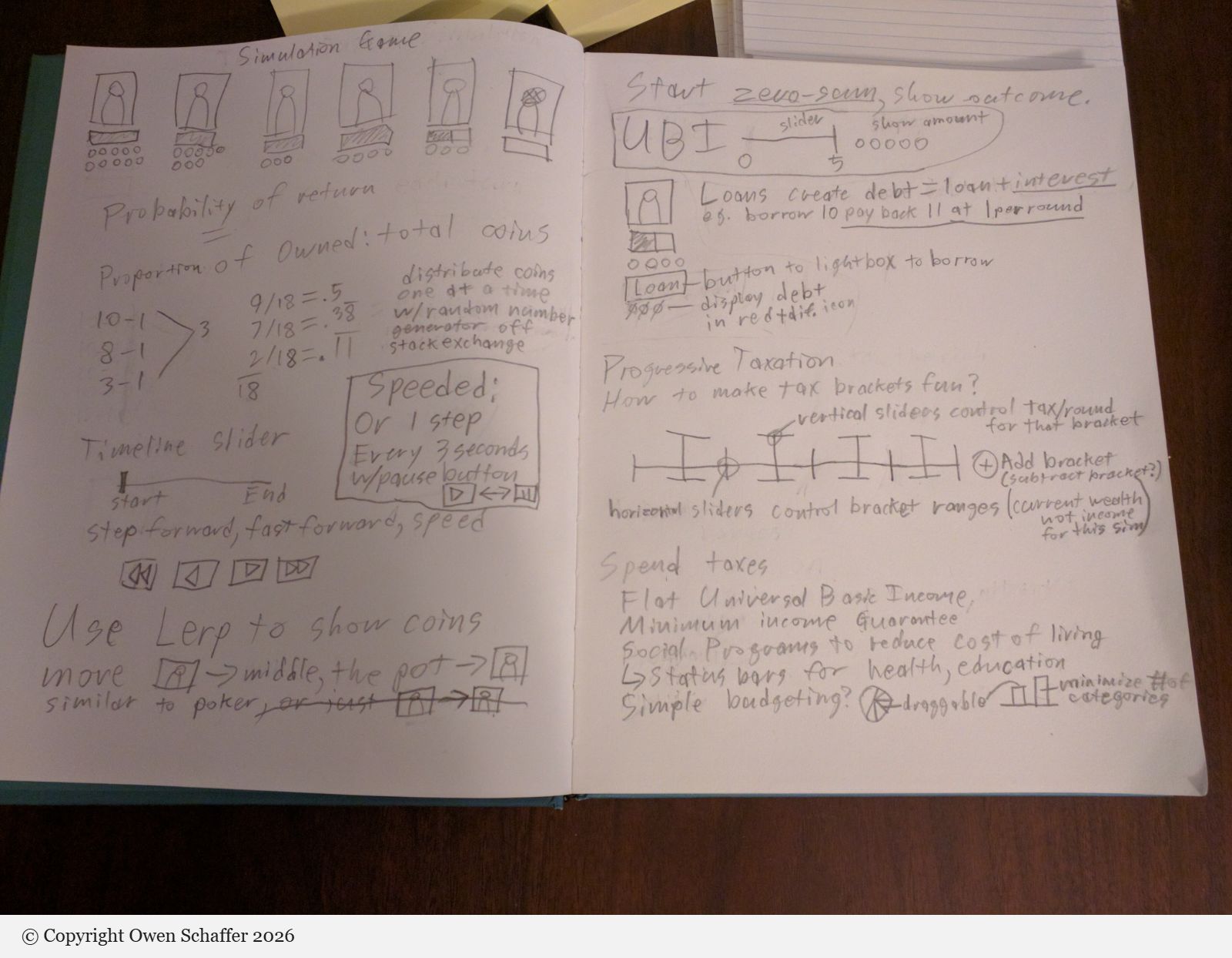
Hand-drawn notebook sketch of a simulation game: player cards with coin counts, timeline and playback controls, a UBI slider, loan and debt display, and progressive tax bracket sliders

Early brainstorming sketch. Assembli started as an idea for a simulation game and evolved into a web app.
Prototype

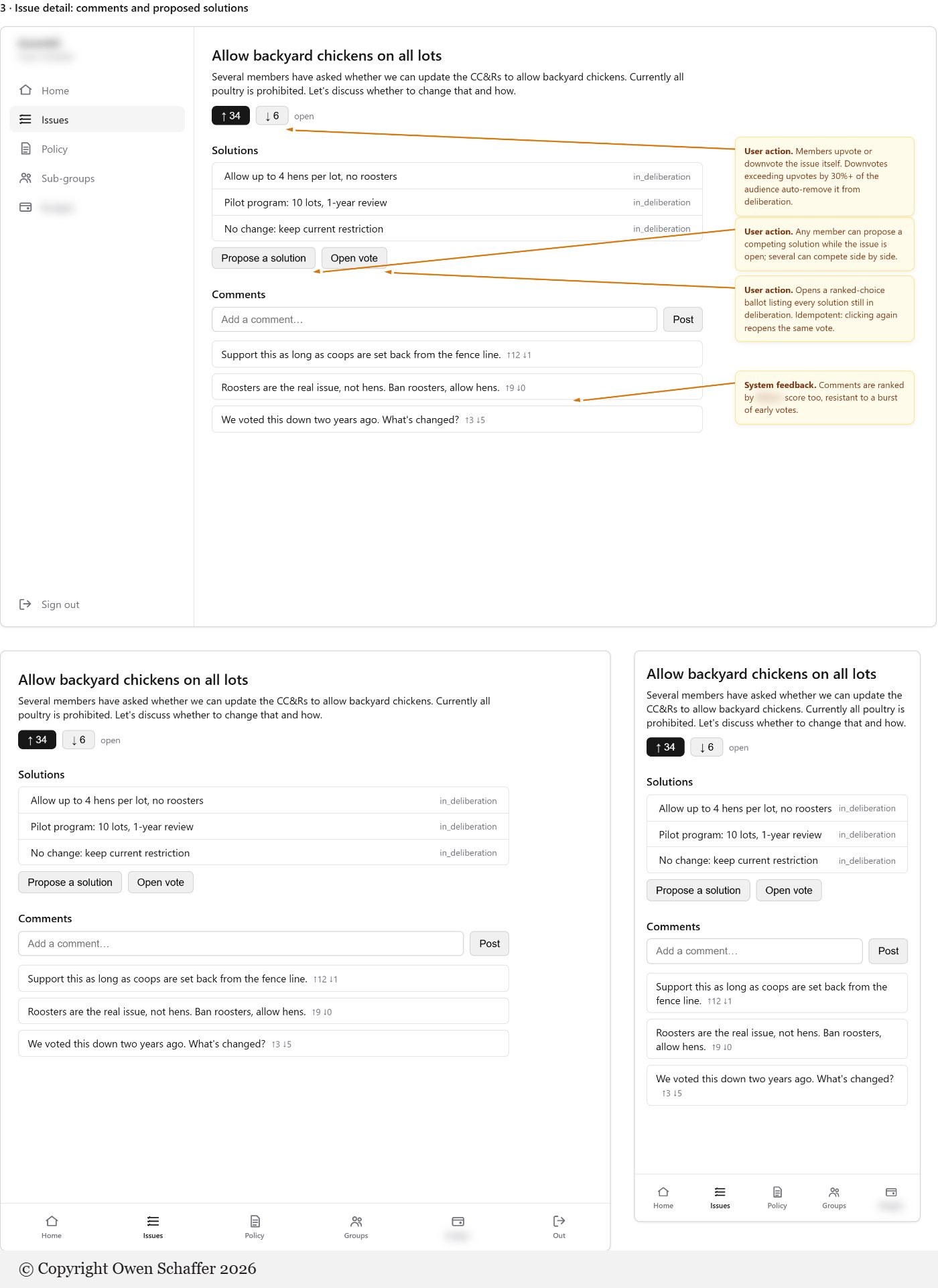
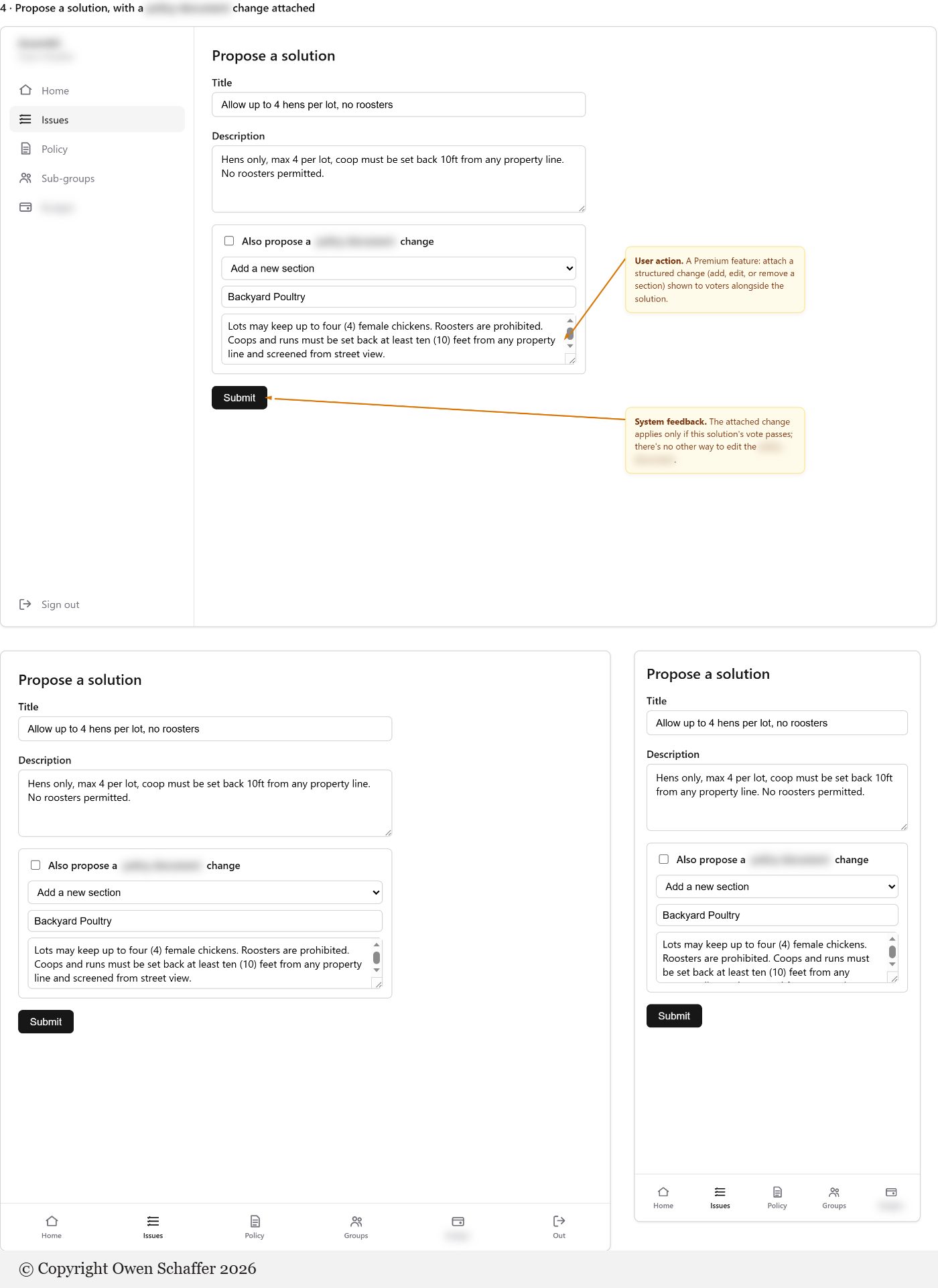
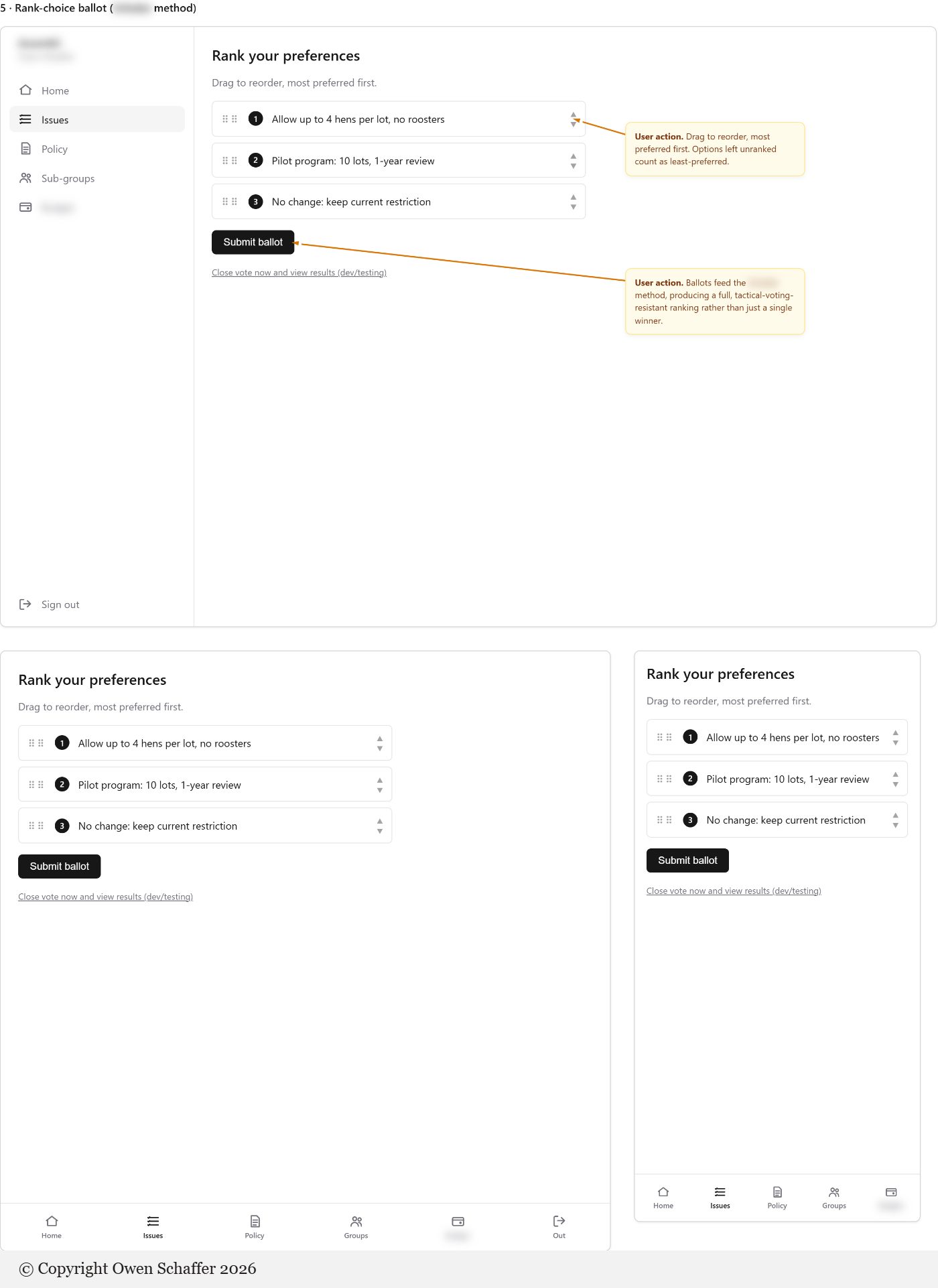
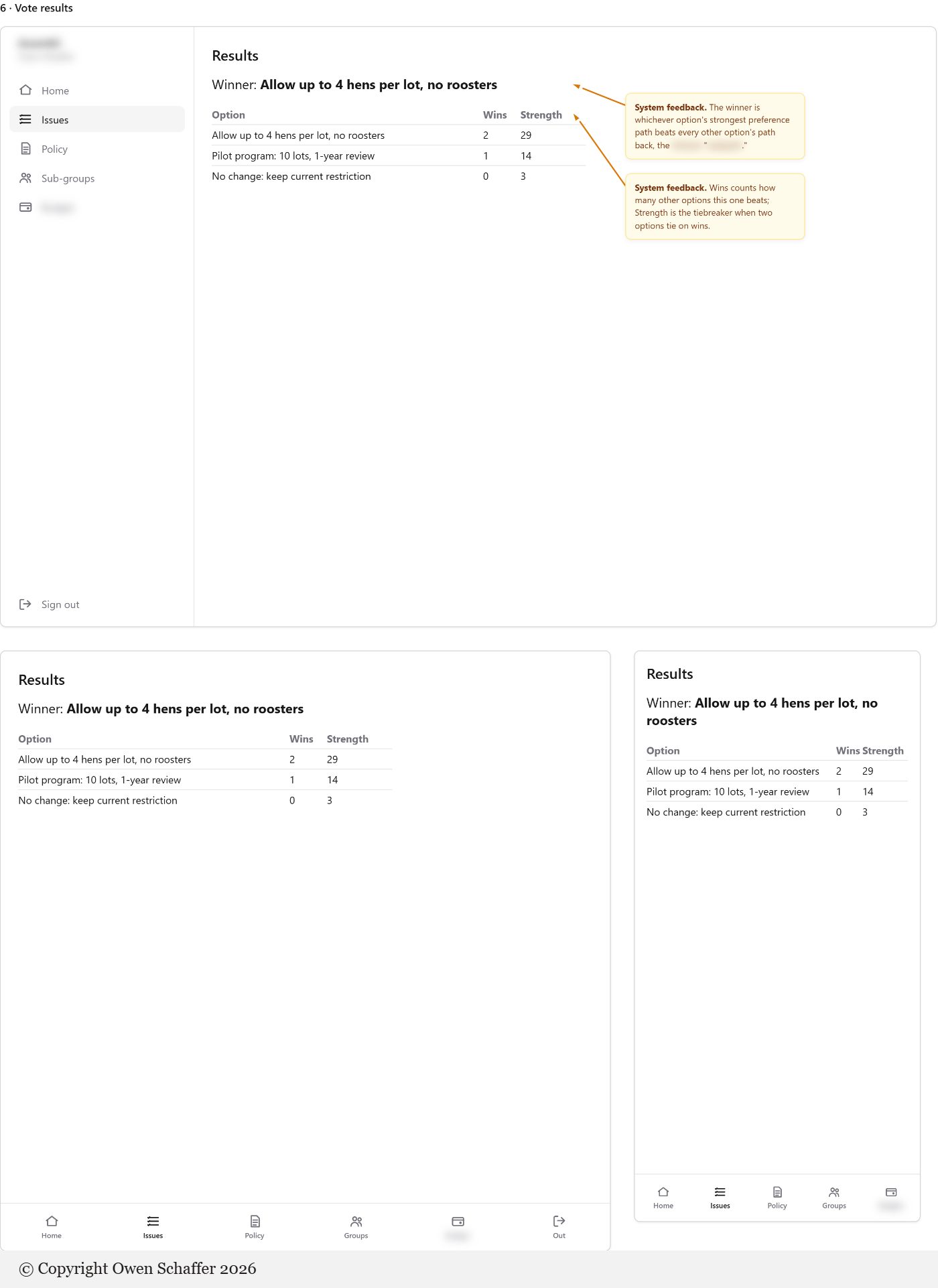
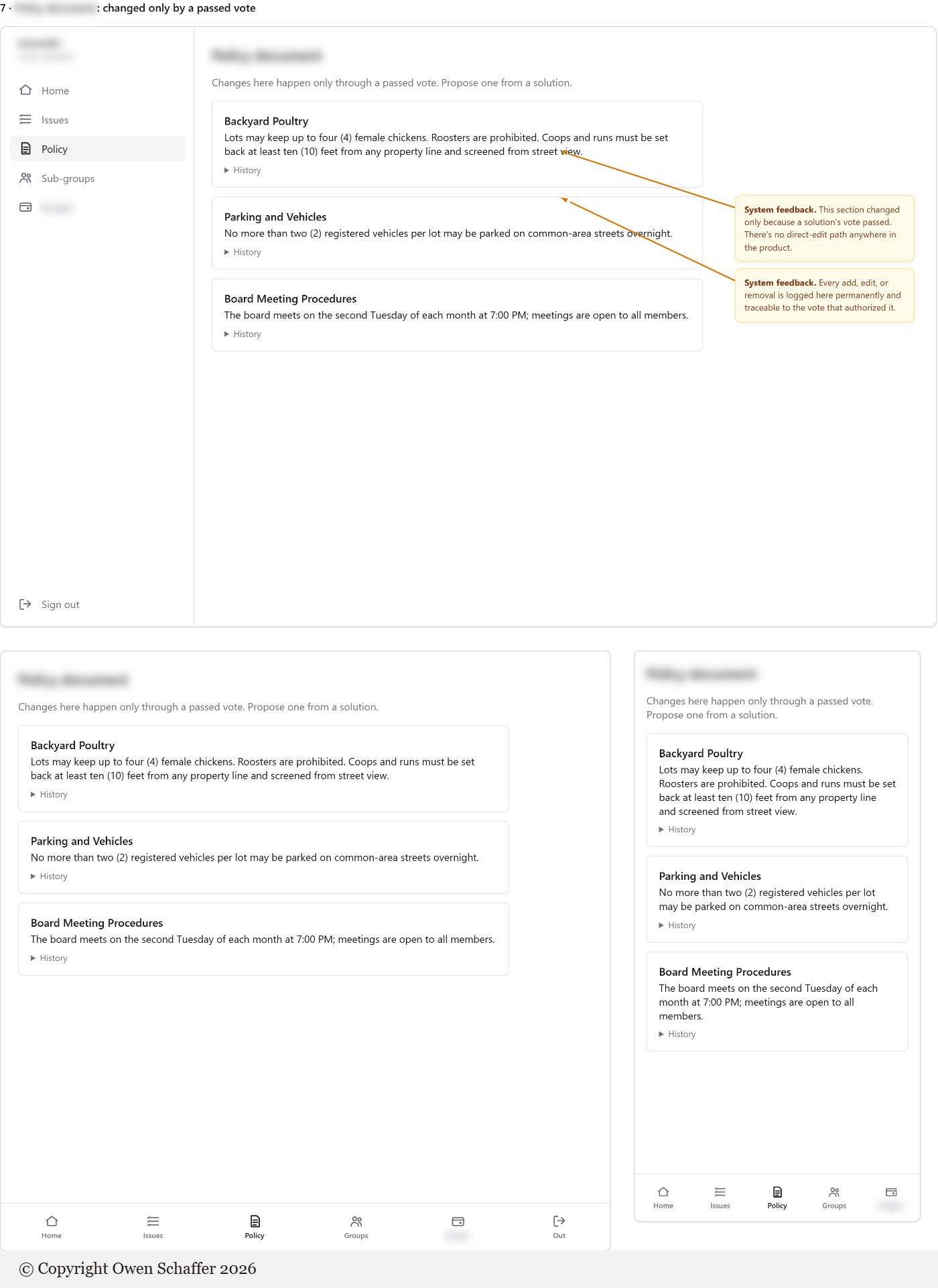
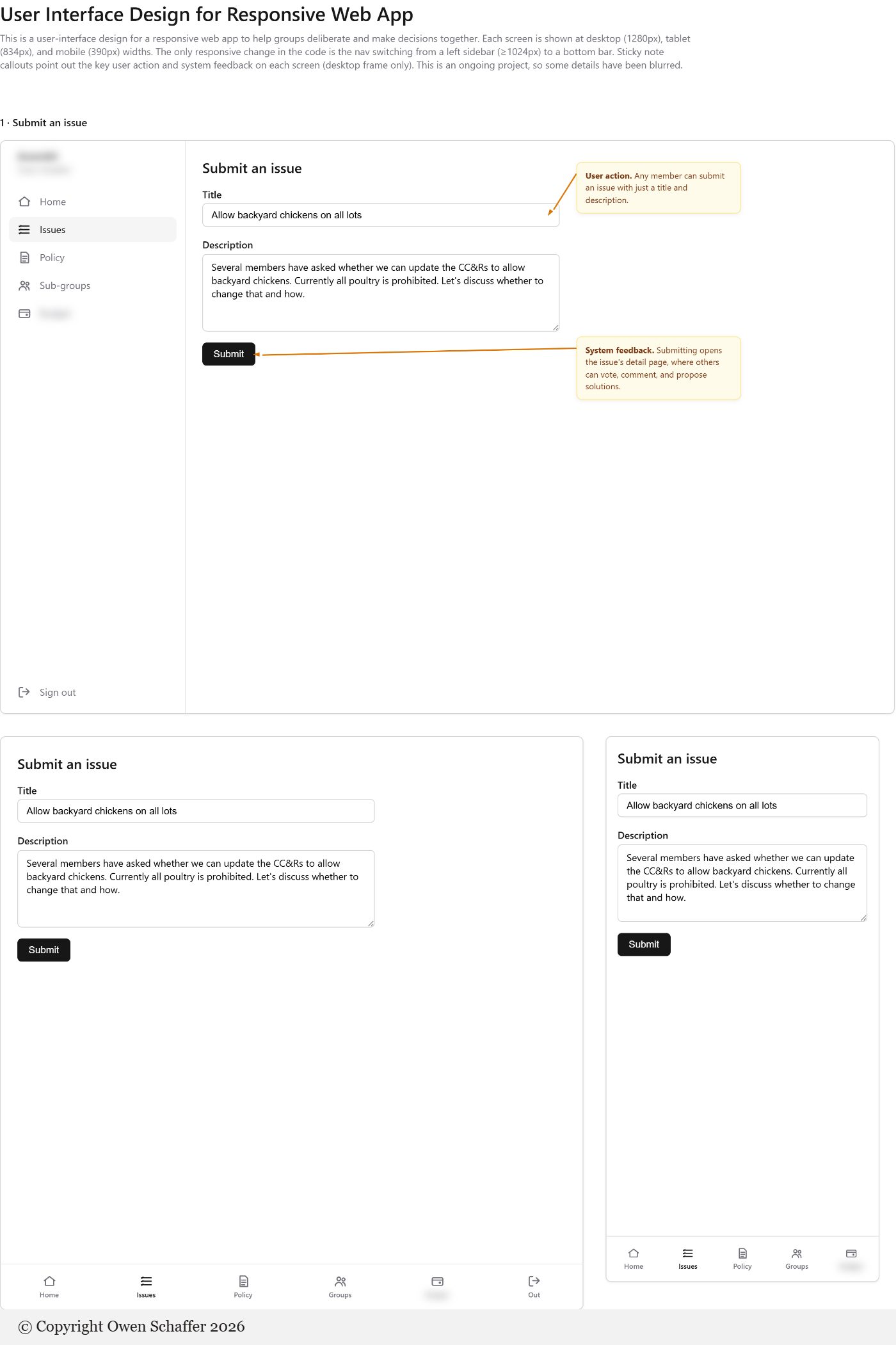
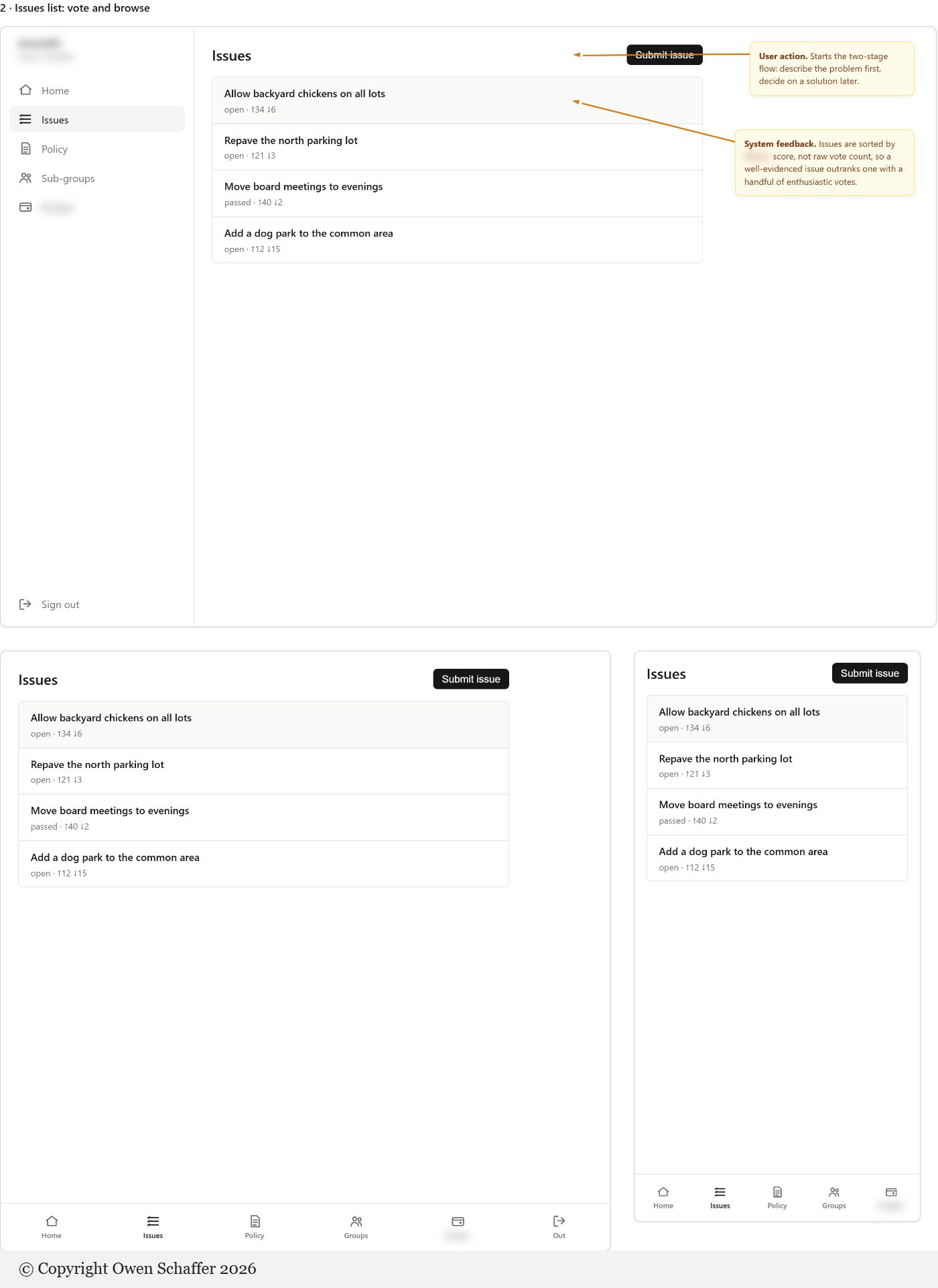
Submit an issue screen at desktop, tablet, and mobile widths, with callouts on user action and system feedbackIssues list screen at three widths, with callouts on submitting an issue and how issues are sortedIssue detail screen with comments and proposed solutions at three widths, with callouts on voting and proposingPropose a solution screen with an attached change at three widths, with calloutsRank-choice ballot screen at three widths, with callouts on ranking and submittingVote results screen at three widths, with callouts on how the winner is chosenPolicy document screen at three widths, showing that sections change only through a passed vote

Build

Live, interactive demo of Assembli, still in progress.

Password: DecideTogether

Open the live demo ↗
UX research

Does guiding users reduce or increase enjoyment?

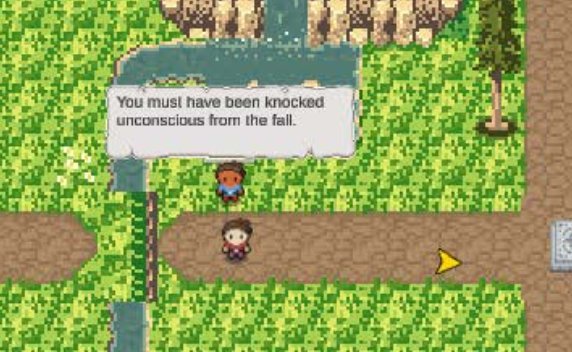
Game screenshot: a yellow arrow beside the player character points to the next destination on the path

The navigational pointer, a yellow arrow that moved with the player and pointed to the next destination.
Question
Many game designers avoid guidance as hand-holding. Flow theory predicts the opposite, because knowing where to go next helps people enjoy an activity.
Method
In a 2×2×2 controlled experiment, 314 participants each played one of eight versions of a custom 2D game. Each version added or removed a navigational pointer, a quest log, and humorous dialog.
Result
The pointer significantly increased enjoyment and players' sense of clear goals and navigation, optimal challenge, and continuous feedback (all p < .001). The largest effect was on clear goals and navigation (partial η² = .42). The quest log and humorous dialog had no significant effect.
Role
Principal investigator, co-authored with student researchers Uday Sai Reddy Ambati and Gregory Brandt.
Ambati, Brandt, & Schaffer, HCI International 2022 ↗

A validated measure of enjoyment

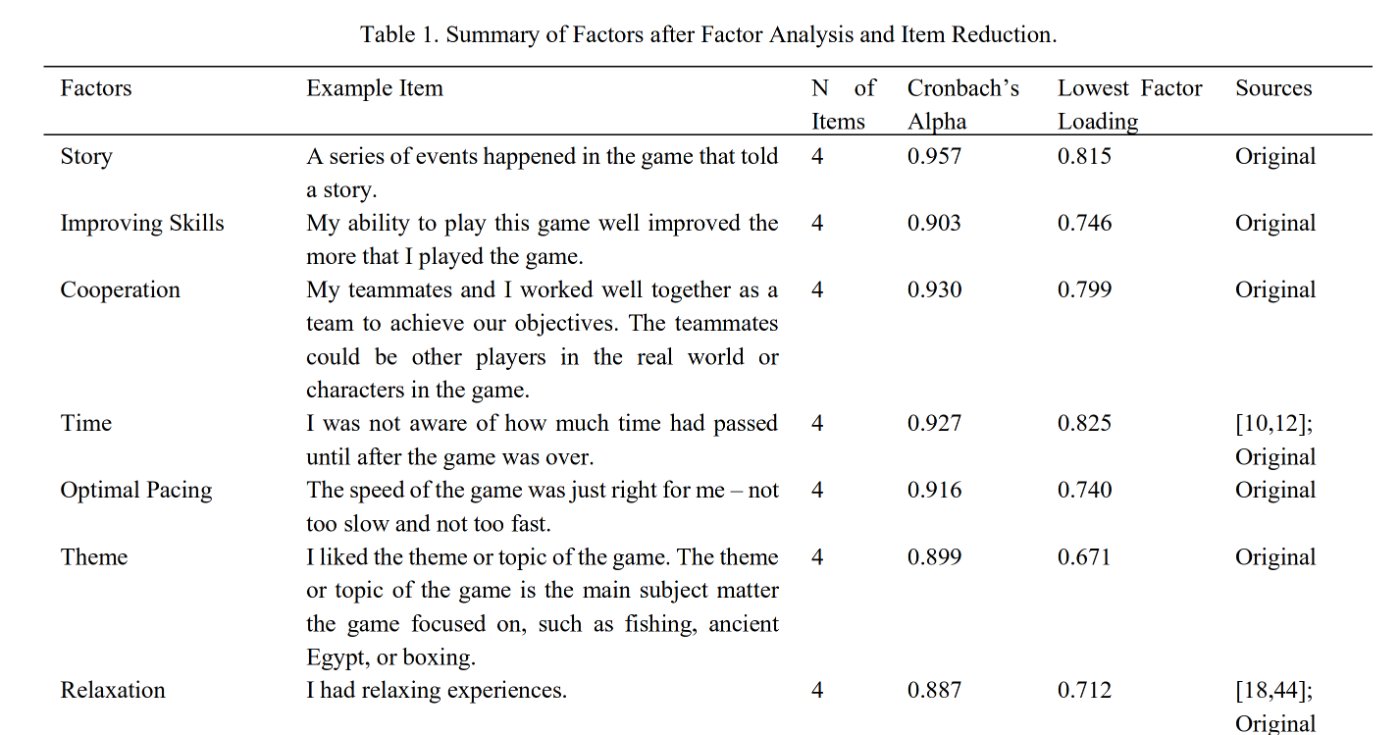
Top of Table 1 from the paper: factors such as Story, Improving Skills, Cooperation, Time, Optimal Pacing, Theme, and Relaxation, each with an example item, four items, Cronbach's alpha, and lowest factor loading

Top of Table 1, factors after factor analysis and item reduction. This shows 7 of the 38 sources of enjoyment found.

Question
Popular player experience measures leave out sources of enjoyment such as humor, relaxation, and savoring. How can researchers and designers measure them?
Method
Dr. Schaffer built two questionnaires from the sources of enjoyment found in an earlier card-sorting study. They draw on flow theory, self-determination theory, and desire fulfillment theory. Factor analysis of a survey of 564 participants validated both.
Result
The Enjoyment Questionnaire measures game enjoyment, and the Sources of Enjoyment Questionnaire measures 38 of its sources. Every scale showed construct validity and internal consistency, with evidence of convergent and discriminant validity. A short version uses up to four items per factor.
Schaffer, CHI 2022 Extended Abstracts ↗

18 publications, including CHI

18 publications on user engagement, motivation, and flow, including work presented at CHI and HCI International. Several of the 25 student researchers Dr. Schaffer has mentored are co-authors.

See all research →

Directed projects

Over 91 student projects

As a professor, Dr. Schaffer has led over 91 student team projects in game development courses, from concept through delivery, and directed individual projects in web design and development. Their games and websites are on the Directed Projects page.

See directed projects →

Six years of UX design and research in industry

Dr. Schaffer led user research and design at Kaiser Permanente, Human Factors International, and Ubisoft, improving user experiences for websites and games.